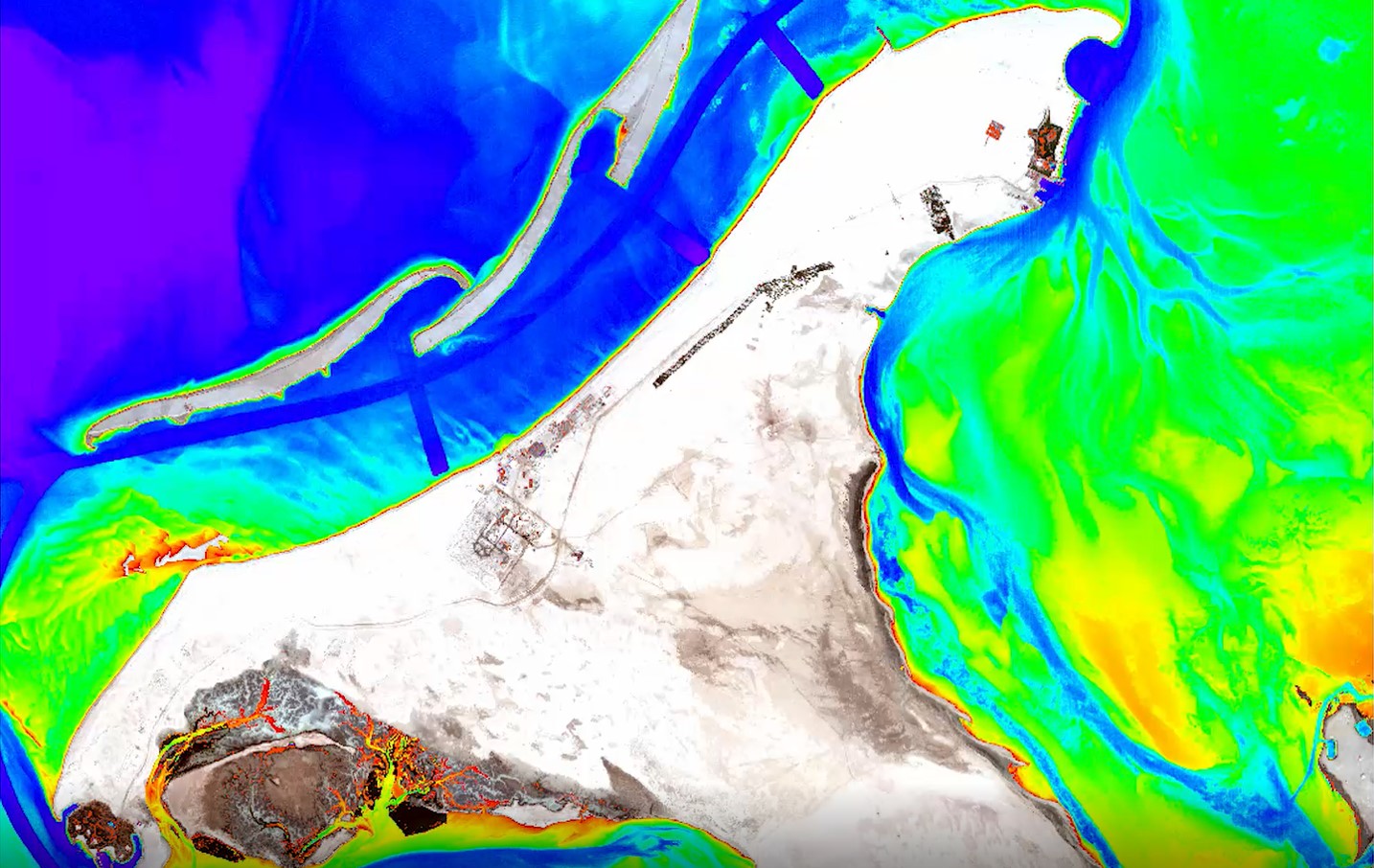

JeoDijital provides a comprehensive range of optical satellite imagery products ranging from very high-high resolution, multispectral to hyperspectral EO satellite imagery data products. We provide a combination of more than 100 active and passive EO satellites imagery data ranging in resolutions from 30 centimeters to several hundred meters. We also provide various wavelength SAR satellite data from different data providers both open and commercial.
Optical Satellite Imagery
Optical sensors capture various resolution imagery data in the visible, near-infrared and shortwave infrared as well as thermal-infrared spectrum, providing detailed visual representations of the Earth’s surface for applications like mapping, monitoring, and environmental analysis.
- High Resolution Imagery: Optical high-resolution sensors capture very-high to high-resolution images in the visible spectrum, providing detailed visual representations of the Earth’s surface for applications like mapping, monitoring and analysis.

- Multispectral Imagery: Multispectral imagery sensors capture data across multiple wavelengths, including visible and infrared, allowing for detailed analysis of everyday images outside the visible spectrum.

- Hyperspectral Imagery: Currently multispectral sensors have a limited number of optical bands and spectral resolution with limited detection and measurement capabilities. This limitation reduces the amount of data available to detect and identify materials.
Our partner Pixxel has developed state of the art hi-resolution hyperspectral sensors that can accurately identify materials and track environmental changes over time. Pixxel’s hyperspectral imaging satellite constellations namely Fireflies and Honeybee are designed to provide global coverage at a revisit of every 24 hours. The Fireflies are currently the world’s highest-resolution commercial-grade hyperspectral satellites with a 5m resolution. The first three of the Fireflies constellation launched in January 2025. Further satellites for this constellation are in development with three additional satellites due to launch Q2 of 2025. The Honeybee satellites, which will be equipped with sensors spanning the VNIR to SWIR spectrum and featuring up to 260 spectral bands, are scheduled for launch in 2025.
RADAR/SAR Satellite Imagery
Synthetic Aperture Radar sensors use radar signals to create detailed images of the Earth’s surface, penetrating clouds and darkness, enabling accurate monitoring and analysis in all weather conditions.